
When was the last time you could see clearly without squinting or adjusting the light? Small changes are easy to adapt to, until they stop working.
At Angel Eye & Cataract Centre, we assess how your vision has changed and what may be causing it. Our SMC-registered ophthalmologists take a structured, personalised approach to evaluating your eyes and guiding you on appropriate next steps.
Inside your eye sits a natural crystalline lens — a clear, flexible structure located behind the coloured part of your eye (the iris). Its role is to bend and focus incoming light so that it lands right on the retina at the back of the eye. This process, known as retinal focus, allows you to see sharp, detailed images at different distances.
Over time, the proteins that make up this lens can begin to change. Instead of remaining transparent and organised, they may start to clump together. This gradual protein breakdown causes parts of the lens to lose clarity, forming an opaque lens.

Normal Vision

Vision with Cataract
As the lens becomes less transparent, light is no longer able to pass through cleanly or focus on the retina.
Cataracts are considered a progressive eye condition, meaning these changes tend to develop slowly rather than suddenly. In many cases, the early stages may not significantly affect daily activities. As cataracts progress, however, the impact on your vision becomes more noticeable.
Cataracts are a leading cause of vision changes in older adults globally. In Singapore, where one in four citizens will be aged 65 and above by 2030, more people are likely to develop cataracts due to ageing.
From your 60s onwards, some degree of lens clouding becomes common.
Although this is a natural part of ageing, cataracts are treatable. With appropriate assessment and the right eye treatment or cataract surgery, your vision can be restored.
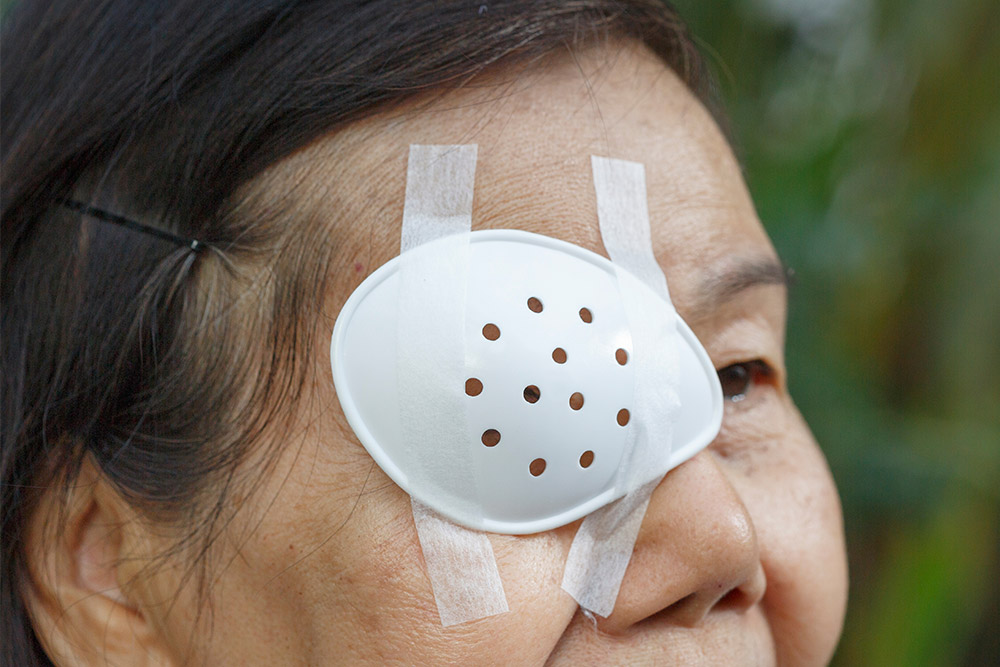
Cataracts often develop gradually, which means symptoms can be easy to miss at first. You should look out for:

This is when you feel discomfort in bright sunlight or find oncoming headlights harsh when driving at night.

where you update your prescription more often but the clarity doesn’t last or is not as sharp as expected.

Around streetlights, headlights, or indoor lighting, especially in low-light settings.

For example, whites may look slightly yellowed.

This means your vision becomes less sharp. Text may look slightly blurred, even with glasses on, and you may need to squint to see clearly.

You turn on additional lights to read comfortably or move closer to a light source to see clearly.

When you cover one eye, you still see a faint “shadow” or duplicate of an object, such as overlapping letters when reading.
You should consider seeing a cataract specialist when these symptoms begin to affect daily activities like reading, driving, or recognising faces. Even mild symptoms can point to cataracts or another underlying eye condition. A proper assessment helps confirm the cause and whether treatment is needed.
If your vision feels different from your usual baseline, it’s worth having it checked.
Book a consultation with Angel Eye & Cataract Centre to have your vision assessed.
While cataracts are most commonly linked to ageing, several factors can influence when they develop and how quickly they progress. These include underlying medical conditions, environmental exposure, and long-term lifestyle habits.
An age-related cataract develops as part of the natural ageing process.
As you get older, changes within the lens accumulate over time. This makes cataracts more likely to develop, particularly from your 60s onwards. The progression is usually gradual, which is why symptoms may take time to become noticeable.

Certain medical conditions can increase your likelihood of developing cataracts or cause them to appear earlier, including:
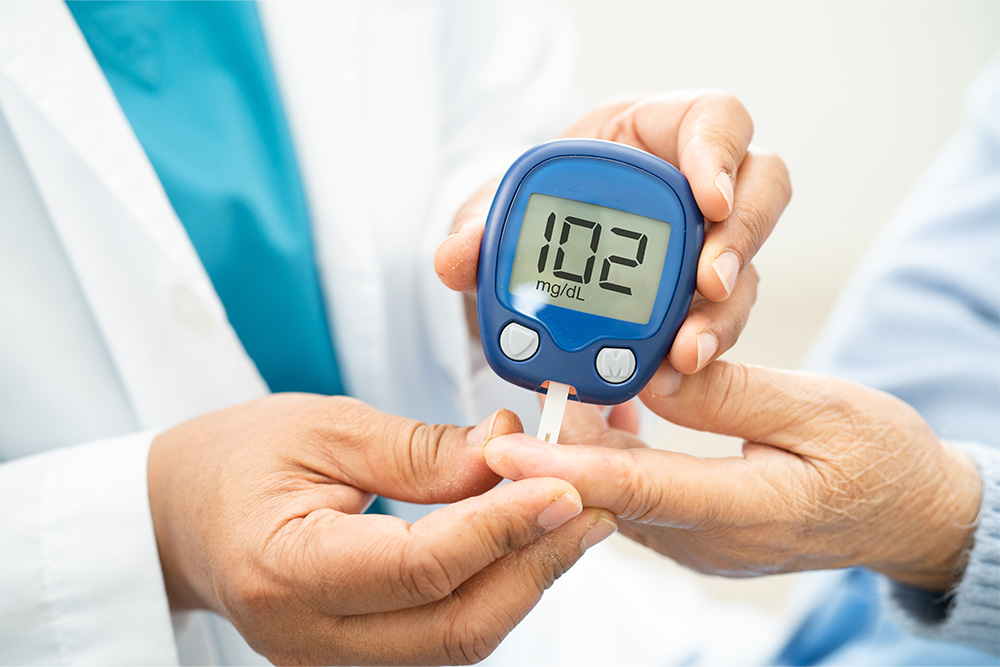
Your habits and environment can also play a role. These include:

Cataracts can develop in different parts of the lens, and the location often influences how your vision is affected.
A nuclear cataract forms in the centre (nucleus) of the lens. This type is commonly linked to ageing. In the early stages, you may notice a gradual reduction in distance vision, while near vision may temporarily seem clearer.
Over time, the lens can become more yellowed or brownish, which may affect how you perceive colours.
As it progresses, vision may become more blurred, and everyday tasks such as reading signs or recognising faces from a distance can become more difficult.
A cortical cataract develops in the outer layer (cortex) of the lens. It often starts as white, wedge-shaped streaks that extend inward from the edges of the lens. These changes can interfere with how light enters the eye, leading to increased glare.
You may notice difficulty seeing clearly in bright conditions or feel discomfort when exposed to strong light. Glare from headlights or sunlight may become more pronounced, especially when you’re driving.
A posterior subcapsular cataract forms at the back of the lens. This type can affect vision more quickly than others. You may experience difficulty reading, increased glare in bright light, or problems seeing clearly in well-lit environments.
It’s also commonly associated with halos around lights and reduced contrast, making it harder to distinguish details, particularly in bright settings.
Congenital cataracts are present at birth or develop during early childhood.
They may affect one or both eyes and can vary in severity. In some cases, they may not significantly impact vision, while in others, they can interfere with normal visual development. Early detection and monitoring are important to support visual development in children.
Secondary cataracts can develop as a result of other medical conditions or after certain treatments. These are often associated with conditions such as diabetes, long-term use of certain medications, or previous eye surgery. In some cases, patients may also notice a return of blurred vision months or years after cataract surgery due to changes in the lens capsule.
A standard optical shop check can identify changes in your prescription, but it cannot confirm whether cataracts are present or assess their severity.
A diagnosis requires a comprehensive ophthalmic assessment performed by an ophthalmologist. This allows the structure of the eye to be examined in detail and helps determine whether cataracts or another condition may be affecting your vision.
At Angel Eye & Cataract Centre, our cataract surgeon may use the following assessments:
A specialised microscope is used to examine the front structures of your eye, including the lens. This allows us to identify the presence, location, and density of any lens opacity.
Your clarity of vision, contrast sensitivity, and how your eyes respond to light may be evaluated to understand how your vision is affected.

This measures the pressure inside your eye and screens for conditions such as glaucoma, which may occur alongside cataracts.
Cataracts cannot always be prevented, particularly when they’re caused by ageing. However, certain measures may help reduce risk. You can:
These steps may reduce risk but do not eliminate it.

There are currently no eye drops, medications, or exercises that can reverse or cure cataracts.
In early stages, medical management focuses on improving comfort. This may include updating prescriptions, improving lighting, or adjusting visual habits. However, these measures do not stop progression.
The definitive surgical treatment is cataract surgery. This involves removing the cloudy lens and replacing it with an artificial intraocular lens implant.
This supports visual rehabilitation, which means you regain clearer vision for daily activities.
The overall cost of surgery usually covers:
Singapore residents may be able to offset part of the cost through MediSave. Based on Ministry of Health (MOH) guidelines, you can withdraw up to $3210.
Additional coverage may also be available through MediShield Life and Integrated Shield Plans.
For a clearer estimate based on your assessment and lens selection, talk to our team. We’ll also guide you through financing options during our financial counselling after the consultation with Dr Fong.
In Singapore, the typical price range of cataract surgery in Singapore is about $6,500 to $12,749, depending on several factors. These include the complexity of the procedure, the type of intraocular lens (IOL) selected, and where the surgery is performed.

If you’ve been adjusting your routine to cope with your vision, it may be time to find out what’s causing the changes.
At Angel Eye & Cataract Centre, we help you understand whether cataracts or another condition may be involved, and what you can do about it.
Our friendly team is looking forward to serving you. For urgent enquiries and appointment requests, please call or WhatsApp us directly.
Once removed, the cataract itself does not return. Some people may develop clouding of the lens capsule (which is a separate condition called PCO, posterior capsular opacification) later, and this can be treated with a YAG laser procedure.
Not entirely. However, protecting your eyes from UV exposure, managing conditions like diabetes, and avoiding smoking may help reduce risk or delay onset.
It varies. Cataracts typically develop slowly over several years, but the rate can differ depending on age and health factors. Eg in a poorly controlled diabetic patient. The cataracts will develop faster than in a patient with excellent control of diabetes.
No, cataracts do not reverse on their own. If your vision is significantly affected, you may need cataract surgery.
