
The intraocular lens (IOL) selected during eye cataract surgery can influence how you see afterwards, including your vision at different distances and whether you still need spectacles for certain activities.
At Angel Eye & Cataract Centre, our doctors will guide you through different IOL options and provide a recommendation based on your eye measurements, visual priorities, and overall eye health.

An intraocular lens (IOL) is a clear, artificial lens used to replace the natural crystalline lens after cataracts cause it to become cloudy and less transparent.
The natural lens normally bends and focuses incoming light onto the retina so you can see clearly. When cataracts interfere with this process, vision typically becomes blurred, dimmer, or less sharp over time.
Cloudy lenses are removed during cataract surgery in Singapore and replaced with an artificial lens implant to restore clearer vision.
Although an intraocular lens replaces the cloudy cataract lens, it does not fully function like the natural lens you were born with.
A healthy natural lens continuously adjusts focus as you shift between near and distant objects. This flexibility gradually reduces with age, even before cataracts develop.
An artificial lens implant improves how light passes through the eye, but it cannot completely reproduce the natural focusing ability of a younger lens. The goal of an IOL implantation is therefore to improve retinal focus and visual function following your cataract treatment in Singapore.

At Angel Eye & Cataract Centre, different intraocular lenses are designed to support different visual priorities after cataract surgery.
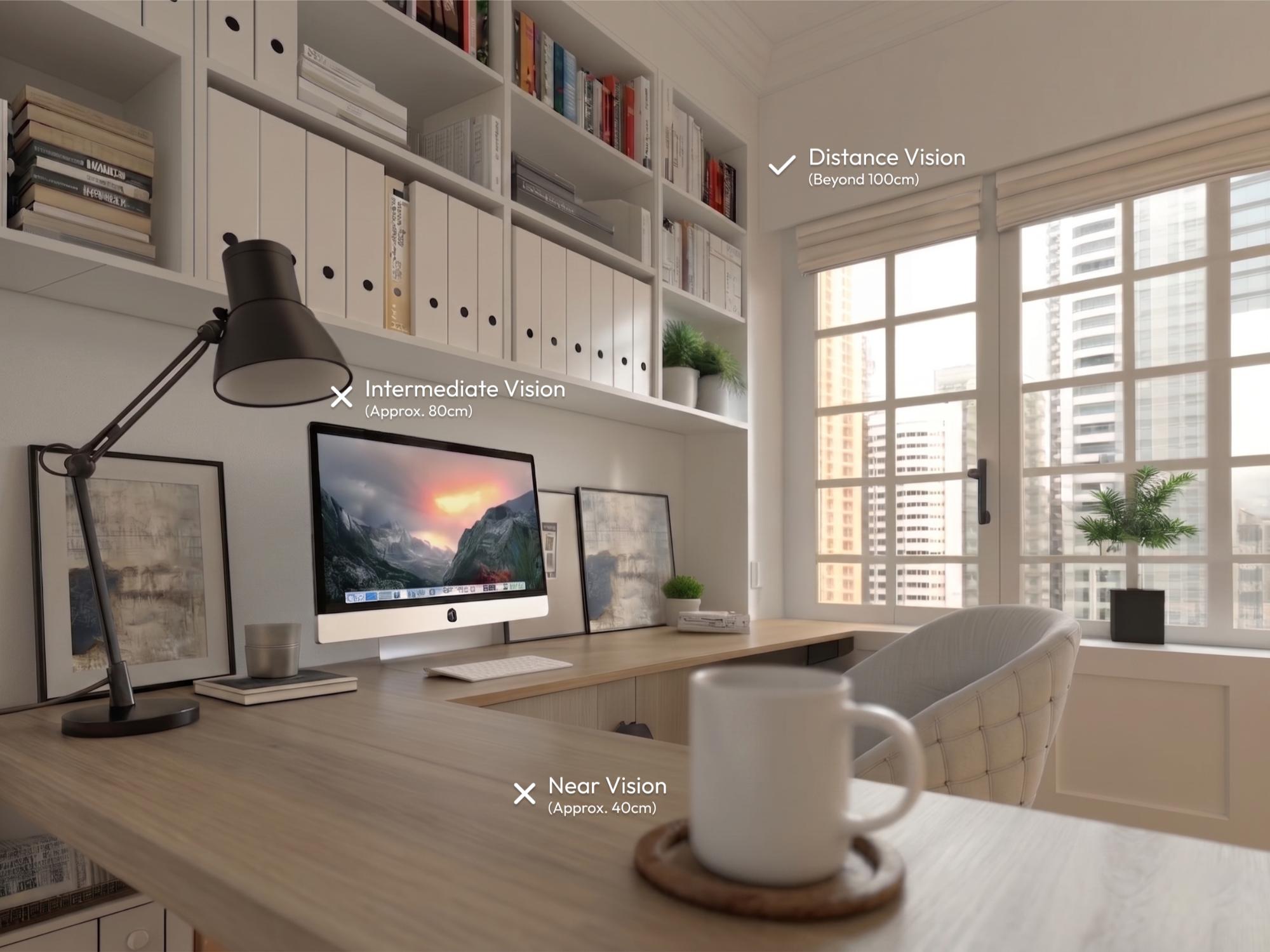
Monofocal intraocular lenses are designed to provide clear vision at a primary focal distance, usually for distance vision.
This means you may still require glasses for reading or close-up tasks after surgery. Monofocal lenses are commonly selected because they provide consistent visual clarity and generally maintain good contrast sensitivity, particularly in low-light conditions.
For example, some patients prioritise sharper distance vision for activities such as driving, walking outdoors, or watching television, and do not mind using reading glasses when needed.
Monofocal lenses may also produce fewer visual disturbances, such as halos or glare, compared to some other lens designs.
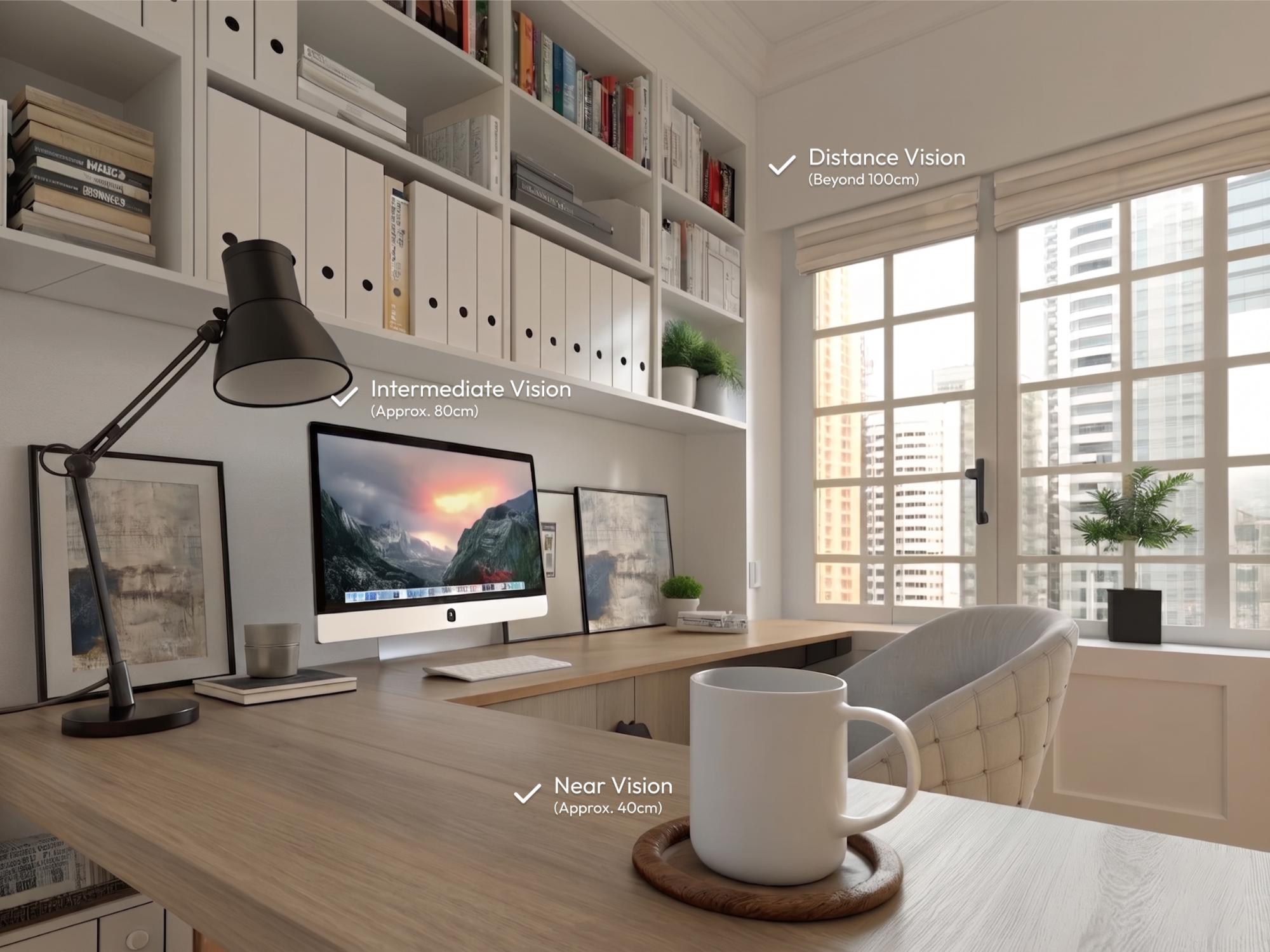
Multifocal intraocular lenses are designed to distribute focus across multiple viewing distances, supporting both distance and near vision as part of presbyopia management.
These lenses may reduce your dependence on glasses. However, because incoming light is divided across different focal points, some patients notice visual disturbances such as halos, glare, or starbursts, particularly at night.
There is also typically a neuroadaptation period, during which the brain gradually adjusts to processing vision differently after cataract surgery.
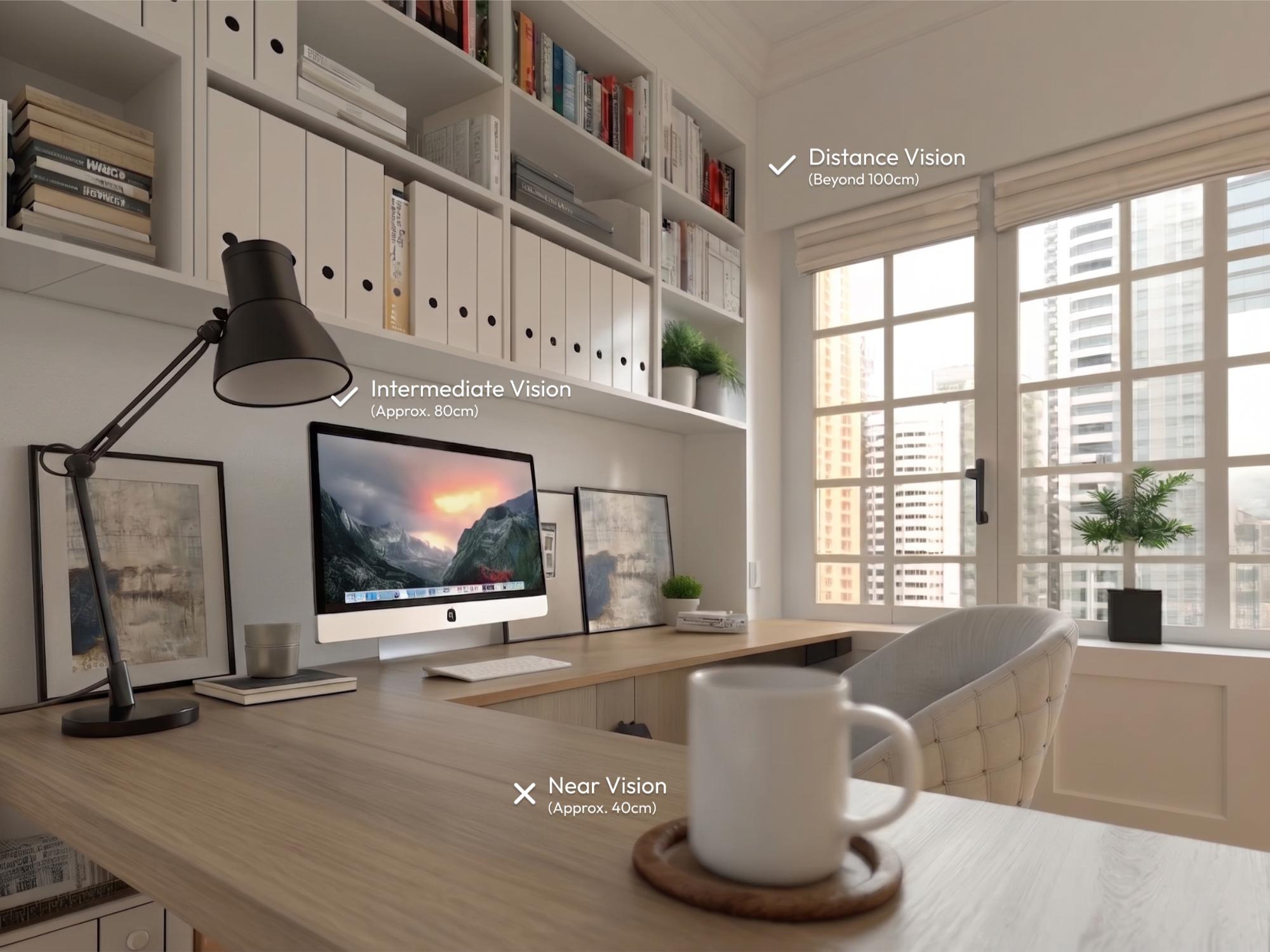
Extended Depth of Focus (EDOF) lenses are designed to create a more continuous range of focus rather than separate focal points.
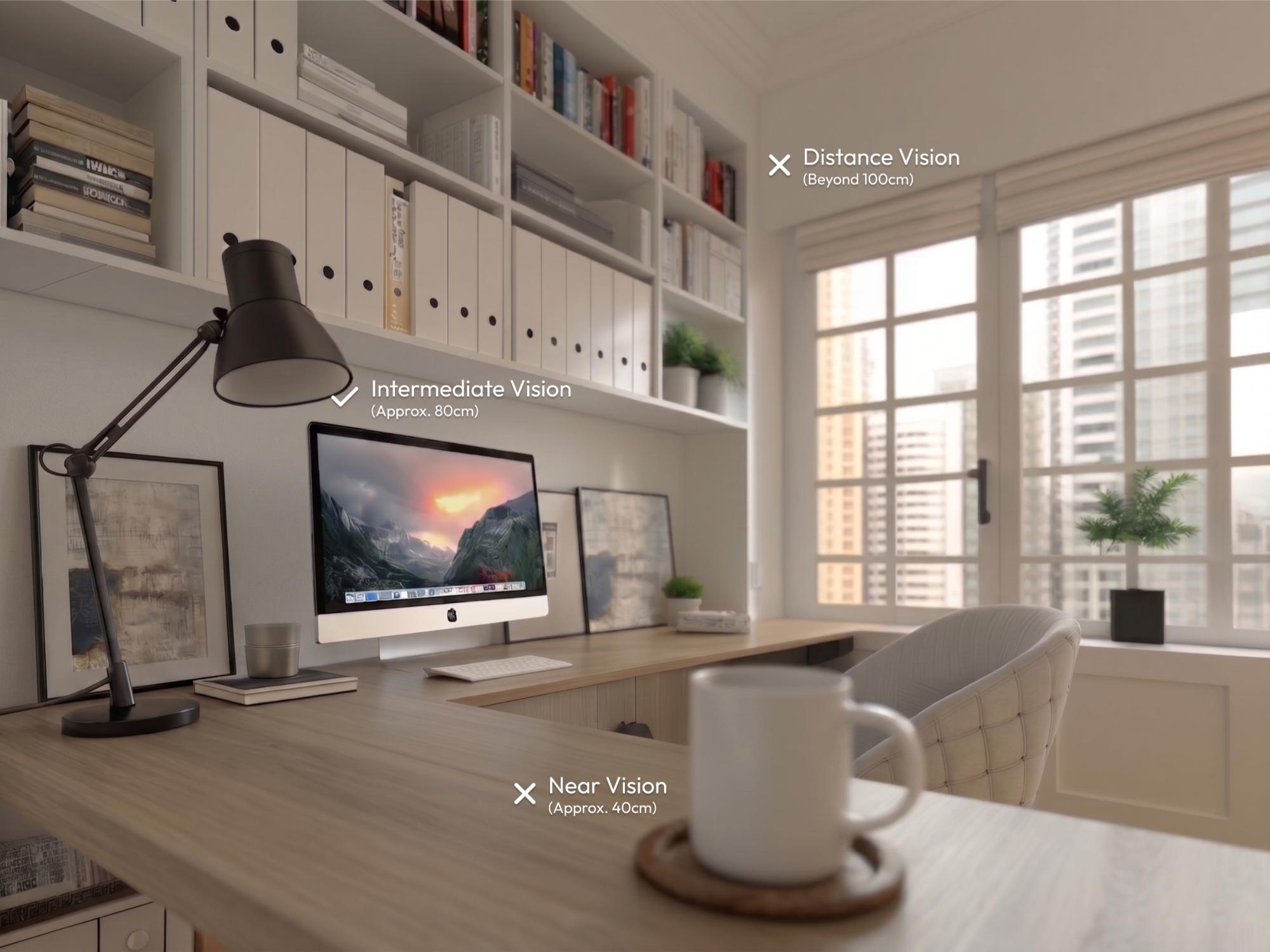
They are commonly used to support distance and intermediate vision, which may be helpful for activities such as computer work, cooking, shopping, or viewing a car dashboard while driving. Reading small print may still require glasses in some situations.
Some patients prefer EDOF lenses when they spend long hours on screens or want a broader visual range without placing as much emphasis on near reading vision.
Compared to multifocal lenses, EDOF lenses may produce fewer nighttime visual disturbances in selected patients.
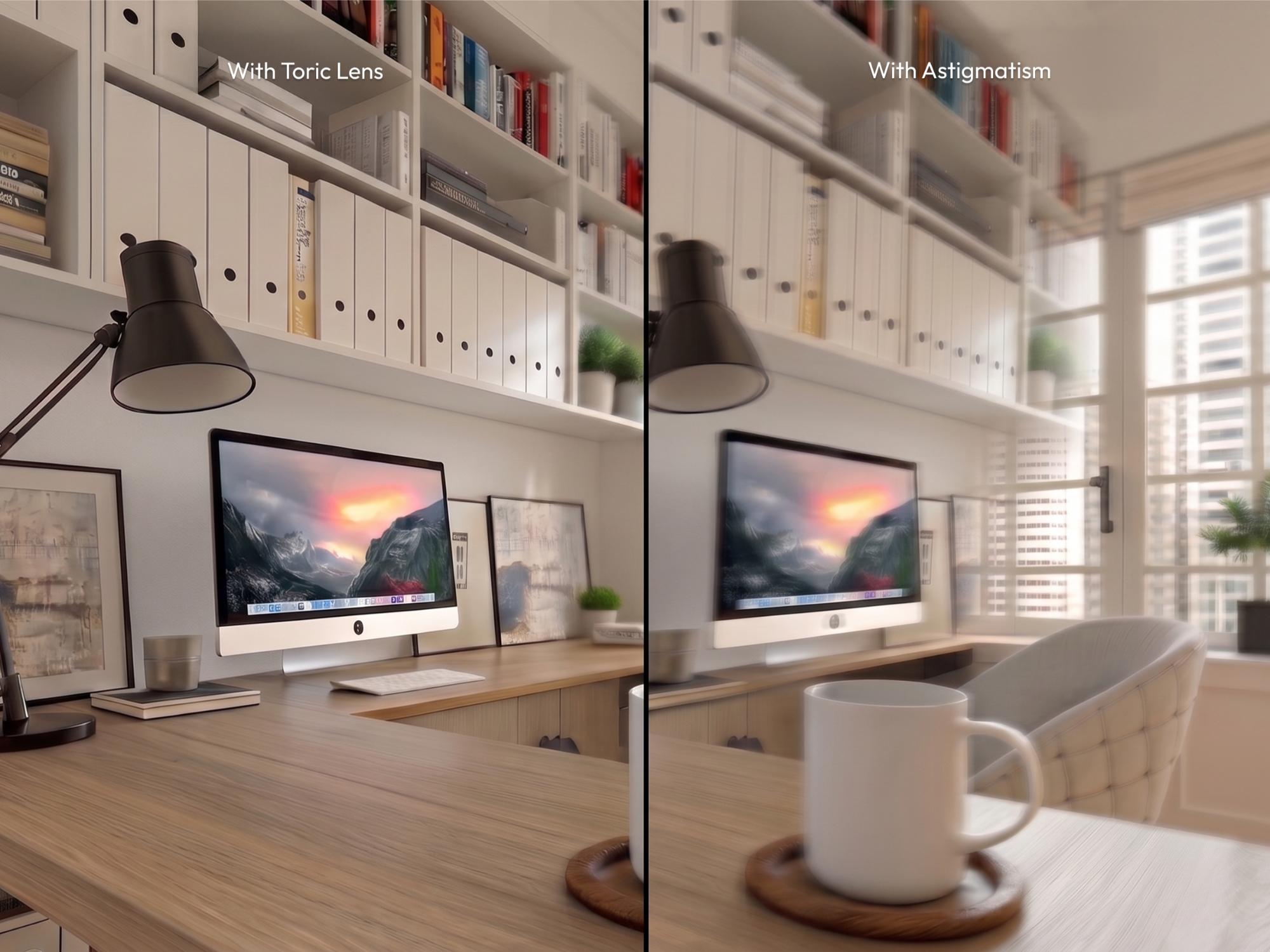
Toric intraocular lenses are designed for astigmatism correction during cataract surgery.
Astigmatism occurs when the cornea has an uneven curvature, causing light to focus irregularly within the eye. This may lead to blurred or distorted vision at different distances.
Patients with astigmatism may notice that text appears stretched, lights look smeared at night, or vision remains unclear even after updating spectacles.
By incorporating astigmatism correction into the artificial lens implant itself, toric lenses may reduce the need for additional spectacle correction after surgery.
Accommodating intraocular lenses are designed to support focus across different viewing distances by responding to movement within the eye.
Unlike standard single-focus lenses, these lenses attempt to create a more natural shift between near and distance vision. Some patients prefer this approach for everyday activities such as looking at their phone and then glancing up to watch television or speak to someone across the room.
The amount of focusing range achieved can vary between individuals, and some people may still require reading glasses for smaller print or prolonged near work.
Compared to other lens technologies, accommodating lenses are used less commonly today and may not be suitable for every patient or visual goal.

Light-adjustable lenses (LALs) are a type of intraocular lens that can be modified after cataract surgery using controlled ultraviolet light treatments.
This allows additional fine-tuning of vision after the lens has already been implanted and the eye has started healing. Adjustments may be used to refine refractive outcomes based on how the eye responds after cataract surgery.
This may be considered in selected cases where highly customised visual outcomes are especially important, such as for patients with more specific visual requirements or complex refractive considerations.
At Angel Eye & Cataract Centre, different intraocular lenses are designed to support different visual priorities after cataract surgery.
Monofocal intraocular lenses are designed to provide clear vision at a primary focal distance, usually for distance vision.
This means you may still require glasses for reading or close-up tasks after surgery. Monofocal lenses are commonly selected because they provide consistent visual clarity and generally maintain good contrast sensitivity, particularly in low-light conditions.
For example, some patients prioritise sharper distance vision for activities such as driving, walking outdoors, or watching television, and do not mind using reading glasses when needed.
Monofocal lenses may also produce fewer visual disturbances, such as halos or glare, compared to some other lens designs.
Multifocal intraocular lenses are designed to distribute focus across multiple viewing distances, supporting both distance and near vision as part of presbyopia management.
These lenses may reduce your dependence on glasses. However, because incoming light is divided across different focal points, some patients notice visual disturbances such as halos, glare, or starbursts, particularly at night.
There is also typically a neuroadaptation period, during which the brain gradually adjusts to processing vision differently after cataract surgery.
Extended Depth of Focus (EDOF) lenses are designed to create a more continuous range of focus rather than separate focal points.
They are commonly used to support distance and intermediate vision, which may be helpful for activities such as computer work, cooking, shopping, or viewing a car dashboard while driving. Reading small print may still require glasses in some situations.
Some patients prefer EDOF lenses when they spend long hours on screens or want a broader visual range without placing as much emphasis on near reading vision.
Compared to multifocal lenses, EDOF lenses may produce fewer nighttime visual disturbances in selected patients.
Toric intraocular lenses are designed for astigmatism correction during cataract surgery.
Astigmatism occurs when the cornea has an uneven curvature, causing light to focus irregularly within the eye. This may lead to blurred or distorted vision at different distances.
Patients with astigmatism may notice that text appears stretched, lights look smeared at night, or vision remains unclear even after updating spectacles.
By incorporating astigmatism correction into the artificial lens implant itself, toric lenses may reduce the need for additional spectacle correction after surgery.
Accommodating intraocular lenses are designed to support focus across different viewing distances by responding to movement within the eye.
Unlike standard single-focus lenses, these lenses attempt to create a more natural shift between near and distance vision. Some patients prefer this approach for everyday activities such as looking at their phone and then glancing up to watch television or speak to someone across the room.
The amount of focusing range achieved can vary between individuals, and some people may still require reading glasses for smaller print or prolonged near work.
Compared to other lens technologies, accommodating lenses are used less commonly today and may not be suitable for every patient or visual goal.
Light-adjustable lenses (LALs) are a type of intraocular lens that can be modified after cataract surgery using controlled ultraviolet light treatments.
This allows additional fine-tuning of vision after the lens has already been implanted and the eye has started healing. Adjustments may be used to refine refractive outcomes based on how the eye responds after cataract surgery.
This may be considered in selected cases where highly customised visual outcomes are especially important, such as for patients with more specific visual requirements or complex refractive considerations.
Start with a comprehensive eye assessment at Angel Eye & Cataract Centre.

Monofocal and multifocal intraocular lenses are designed around different visual priorities. Neither lens is universally “better” than the other. The right option depends on how you use your vision day to day, how important spectacle independence is to you, and whether you prioritise sharper image quality in certain conditions.
Understanding these trade-offs helps set realistic expectations before cataract surgery.
| Consideration | Monofocal IOLs | Multifocal IOLs |
|---|---|---|
|
Primary Visual Focus
|
Designed around a single focal distance, most commonly distance vision
|
Designed to support multiple viewing distances
|
|
Image Sharpness
|
Often perceived as sharper at the selected focal distance
|
Vision is distributed across multiple focal points
|
|
Contrast Sensitivity
|
Typically stronger, especially in dim lighting
|
May feel slightly reduced in low-light settings for some patients
|
|
Night Driving
|
Often preferred by patients who prioritise night driving clarity
|
Some patients notice more glare or halos from headlights
|
|
Common Lifestyle Fit
|
Patients who prioritise crisp distance vision and do not mind reading glasses
|
Patients who prioritise reducing dependence on glasses throughout the day
|
| Consideration | Monofocal IOLs | Multifocal IOLs |
|---|---|---|
|
Reading Glasses
|
Usually still required for reading or near work
|
Less commonly needed for routine daily tasks
|
|
Phone And Screen Use
|
Often requires additional near correction
|
May allow easier switching between screens and distance viewing
|
|
Distance Activities
|
Typically strong distance clarity
|
Supports both distance and near vision
|
|
Everyday Convenience
|
Patients may switch between glasses depending on the task
|
May reduce the need to constantly put on or remove spectacles
|
|
Realistic Expectations
|
Prioritises image clarity over spectacle independence
|
Prioritises broader visual range, though glasses may still occasionally be needed
|
| Consideration | Monofocal IOLs | Multifocal IOLs |
|---|---|---|
|
Risk of Visual Disturbances
|
Generally lower
|
More commonly reported
|
|
Typical Symptoms
|
Mild glare or halos in some situations |
Halos, glare, starbursts, especially at night
|
|
Night-Time Light Effects
|
Usually less noticeable
|
May become more noticeable during night driving |
|
Adjustment Period
|
Often shorter
|
May involve a longer neuroadaptation period
|
|
Patient Experience
|
Many patients adapt quickly
|
Adaptation varies between individuals
|
| Consideration | Monofocal IOLs | Multifocal IOLs |
|---|---|---|
|
General Classification
|
Standard intraocular lens
|
Premium intraocular lens
|
|
Out-of-Pocket Costs
|
Typically lower
|
Usually higher due to additional lens technology
|
|
Medisave Eligibility
|
Standard claim structures generally apply
|
Additional top-up costs may still apply
|
|
Lens Objective
|
Restore clear vision at one focal distance
|
Support a broader range of vision
|
|
Financial Consideration
|
Often selected for simplicity and lower cost
|
Often selected for greater spectacle independence
|
Selecting an intraocular lens is not simply about choosing what is technologically advanced. Different lenses suit different eyes, lifestyles, and visual priorities.
At Angel Eye & Cataract Centre, your lens recommendation is guided by a detailed ophthalmic evaluation before cataract surgery. This helps our doctors understand how you use your vision day to day, how your eyes function clinically, and which lens options may be appropriate for your needs.
We may consider and assess your:
Specialised tests such as optical biometry and corneal topography also help guide our lens planning and surgical calculations.
Ultimately, our goal is to develop a personalised treatment plan that balances visual quality, lifestyle needs, and realistic expectations after cataract surgery.

Different lifestyles place different visual demands on the eyes. For example, if you:

Before cataract surgery in Singapore, your specialist performs detailed eye measurements to guide lens selection and surgical planning.
One important test is optical biometry, which measures the length of the eye and helps calculate the appropriate intraocular lens power.
Your specialist may also perform corneal topography, which maps the curvature and shape of the cornea in greater detail. This is especially important if you have astigmatism or if corneal irregularities are present.
These measurements help determine:
Even small differences in measurements can influence visual outcomes after lens implantation.

Previous refractive procedures such as LASIK, PRK, or radial keratotomy (RK) permanently change the shape of the cornea.
This can make standard lens calculations more complex during cataract surgery because the eye no longer behaves like an untreated cornea.
Additional scans, historical prescription information, and more detailed calculations may therefore be required to improve refractive accuracy after surgery.
Patients who previously underwent laser vision correction may also be more sensitive to subtle visual changes, which can influence which lens technologies are more suitable.

Some patients choose to have both eyes corrected toward similar viewing distances, while others consider different focusing strategies between the two eyes.
Monovision involves setting one eye more for distance vision and the other slightly more for near tasks. Blended vision strategies use a similar principle with a smaller difference between the eyes.
The goal is to reduce dependence on glasses by allowing each eye to support different visual functions.
However, adaptation varies between individuals. Some patients adjust comfortably, while others may notice differences in depth perception or visual balance. Your cataract specialist will assess whether these approaches are appropriate based on your prescription, visual habits, and overall comfort with different viewing distances.
The type of intraocular lens selected can affect the overall cost of your cataract surgery in Singapore:
Your overall surgical bill may also be influenced by factors such as:

You may be able to offset part of the cost through MediSave, depending on the current Medisave withdrawal limits. In some cases, Integrated Shield Plan coverage may further reduce your out-of-pocket expenses.
Our team at Angel Eye & Cataract Centre can discuss with you the clinical and financial considerations of different lens options before you proceed with cataract surgery.
Our team at Angel Eye & Cataract Centre can guide you through your cataract treatment plan in Singapore, including lens selection, procedure details, and expected costs.

Our friendly team is looking forward to serving you. For urgent enquiries and appointment requests, please call or WhatsApp us directly.
Possibly. Some intraocular lenses are designed mainly for distance vision, which means you may still need reading glasses for near tasks. Other lens options may reduce your dependence on spectacles across multiple distances.
No. Intraocular lenses are designed to remain in the eye permanently and do not typically wear out over time. However, some patients may later develop clouding behind the implanted lens, which can often be treated with a laser procedure.
Yes, although this is not commonly required after cataract surgery. In selected cases, the implanted lens can be exchanged later if significant refractive issues or visual problems develop.
